






“Artificial intelligence+”adds new industrialization momentum


The development of digital technology and artificial intelligence is reconstructing the underlying logic of new industrialization. ”
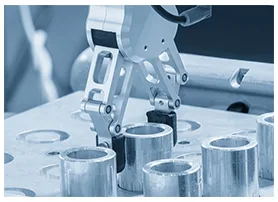
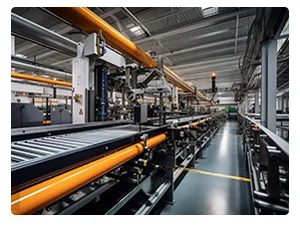
Artificial intelligence is profoundly changing the product form and industrial landscape in fields such as manufacturing equipment, robotics, industrial automation, and industrial software
In the mold factory, the parameter configuration scheme generated by the large model has shortened the trial mold cycle from nearly 100 times to 2 times, and the product quality qualification rate has increased from 92% to 97%.
In the air conditioning factory, through the AI visual quality inspection system, a single device replaces 8 technical personnel, reducing labor costs by 87.5%
At this year’s National People’s Congress and Chinese People’s Political Consultative Conference, representatives and members discussed the integration of artificial intelligence and manufacturing, while sharing the fruitful achievements of artificial intelligence empowering the transformation of traditional industries.
This year’s government work report proposes to continue promoting the “Artificial Intelligence+” initiative, better combining digital technology with manufacturing and market advantages, and supporting the widespread application of large models. This is the second time that “Artificial Intelligence+” has been included in the government work report. Unlike last year’s emphasis on technology research and development and industrial cluster construction, this year’s proposal focuses more on the practical application of technology, and specifically proposes the combination of digital technology and manufacturing advantages, directing the application of artificial intelligence towards the manufacturing industry.
The manufacturing industry is the foundation of China’s founding and strong nation. In recent years, China’s manufacturing industry has significantly improved in terms of high-end, intelligent, and green levels. It has cultivated 421 national intelligent manufacturing demonstration factories and built over 4000 5G factories. The popularization rate of digital R&D design tools in key industrial enterprises has reached 80.1%, and the CNC rate of key processes has reached 62.9%.
China’s manufacturing industry has the advantages of complete categories, large scale, rich scenarios, and huge data potential. Accelerating the exploration of innovative applications of artificial intelligence technology will help inject new innovative momentum into the industry and give birth to various new models and formats, “said Yu Xiaohui, a member of the National Committee of the Chinese People’s Political Consultative Conference and President of the China Academy of Information and Communications Technology.
In the view of Ma Yongsheng, a member of the National Committee of the Chinese People’s Political Consultative Conference and Chairman of Sinopec, artificial intelligence has fundamentally changed the paradigm of industrial development, giving birth to new production factors, shaping new manufacturing systems, creating new organizational forms, and opening up new strategic industries, providing a historical opportunity for China’s industrial transformation from large to strong to excellent.
Artificial intelligence injects new momentum into new industrialization
The report of the 20th National Congress of the Communist Party of China proposed to basically achieve new industrialization by 2035. The National Conference on Industry and Information Technology held at the end of last year proposed that by 2025, the Ministry of Industry and Information Technology will implement the “Artificial Intelligence+Manufacturing” action, strengthen the research and development layout of general and industry models, and apply them in key scenarios. Artificial intelligence is injecting new momentum into the deepening development of new industrialization.
The artificial intelligence of products and the artificial intelligence of production and manufacturing are two directions in which artificial intelligence promotes the transformation and upgrading of the manufacturing industry, “said Tang Dongsheng, a member of the National Committee of the Chinese People’s Political Consultative Conference and vice chairman of the Guangdong Provincial Committee of the Chinese People’s Political Consultative Conference. The former reconstructs product functions and user experience through the implantation of artificial intelligence technologies such as perception, analysis, and decision-making; The latter is the intelligent transformation of traditional manufacturing processes through artificial intelligence technology.
Intelligent terminal manufacturing opens up new space for new industrialization. In 2024, the added value of China’s large-scale computer, communication, and other electronic equipment manufacturing industry will grow by 11.8%, significantly faster than that of large-scale industries. High tech manufacturing and future industries have become key areas for China’s manufacturing industry to gain new competitive advantages in the future.
This year’s government work report proposes to vigorously develop new generation intelligent terminals such as intelligent connected new energy vehicles, artificial intelligence smartphones and computers, intelligent robots, and intelligent manufacturing equipment. Regarding this, Lei Jun, a National People’s Congress representative and founder of Xiaomi Group, stated that artificial intelligence terminals are an important carrier of the new generation of artificial intelligence, accelerating the expansion from smartphones, smart cars, wearable devices to multiple fields such as smart homes and robots. The industrial advantages of smart terminals and consumer electronics give China the opportunity to become a leader in the new pattern.
The upgrading and transformation of traditional industries by artificial intelligence injects new momentum into new industrialization. This year’s government work report proposes to promote the transformation and upgrading of traditional industries, and accelerate the high-quality development of key manufacturing industry chains.
In Yu Xiaohui’s view, the integration and empowerment potential of artificial intelligence in the manufacturing industry is far from being fully unleashed. We should speed up the exploration of AI application in key industries and typical scenarios, deeply integrate it with the industrial Internet, further strengthen the application of “two ends” of R&D, design and marketing services, and promote in-depth application in core links such as production and manufacturing.
Urgent need to establish professional “datasets” and “model libraries”
How to promote artificial intelligence to empower new industrialization? Dataset, model library, ecological construction, and talent cultivation have become the focus of discussion among the representative committee members.
Accelerating the formation of high-quality industry datasets and model libraries has become a consensus among many representatives and committee members. Wang Jiangping, a member of the National Committee of the Chinese People’s Political Consultative Conference and former deputy minister of the Ministry of Industry and Information Technology, stated that specialized datasets are needed to further domesticate large models in order to enable artificial intelligence to enter the real economy and be applied to related professional fields. In the view of Xiao Xinguang, a member of the National Committee of the Chinese People’s Political Consultative Conference and Chairman of Antian Technology Group, it is necessary to embrace universal large-scale models and support the research and development of vertical models for key industries in order to truly embed artificial intelligence into all scenarios and processes.
The development of industrial integration cannot be separated from the support of infrastructure. In response, Tang Dongsheng suggested strengthening the supply of core technologies for AI upgrading in the manufacturing industry, optimizing the construction of the computing power system, and moderately advancing the layout of digital infrastructure supporting AI development, such as national computing power centers, industrial edge computing power centers, and big data platforms.
Talent cultivation is also a highly concerned topic. Regarding this, Wang Jiangping suggests cultivating digital strategy scientists, digital literacy entrepreneurs, model engineers, digital traders, digital industry workers, and others.
In addition, demonstration leadership and ecological construction are also crucial. National People’s Congress representative and CEO of Haier Group, Zhou Yunjie, suggested that we should carry out pilot projects for the deep application of artificial intelligence based on industrial large-scale models, cultivate a group of standardized, reusable, and low-cost solutions that accurately match industrial large-scale models with scene graphs, and provide small and medium-sized enterprises with useful, affordable, and well used artificial intelligence services.
Technological innovation is flourishing, and industrial applications are thriving. Artificial intelligence has illuminated a new direction for the development of new industrialization. With the acceleration of technological innovation and the deepening of integrated applications, artificial intelligence will undoubtedly shine in promoting new industrialization.
Source: People’s Post and Telecommunications Daily https://www.cnii.com.cn/rmydb/202503/t20250312_643277.html